In active response to the Belt and Road Initiative and to vigorously promote international scientific and technological exchange and cooperation, the State Key Laboratory of Safety and Resilience of Civil Engineering in Mountain Areas (SKLSR) and Namangan State Technical University (NamDTU) jointly organized the academic conference “Innovation in Construction, Seismic Safety of Buildings and Structures (ICSSBS)”. The conference was held from November 27 to 28, 2025, at the main campus of NamDTU in Namangan of Uzbekistan. At the invitation of professor I. Abdurahmanov, vice rector of NamDTU, and professor S. Razzakov, former vice rector, a delegation from the SKLSR traveled to Uzbekistan to attend the conference and deliver presentations. The delegation members included professor Wengang Zhang, deputy director of the SKLSR; professor Xiao Li, deputy director of the Experiment Center for Civil Engineering at School of Civil Engineering (SCE); and Dr. Pouria Ayough, assistant researcher at SCE.
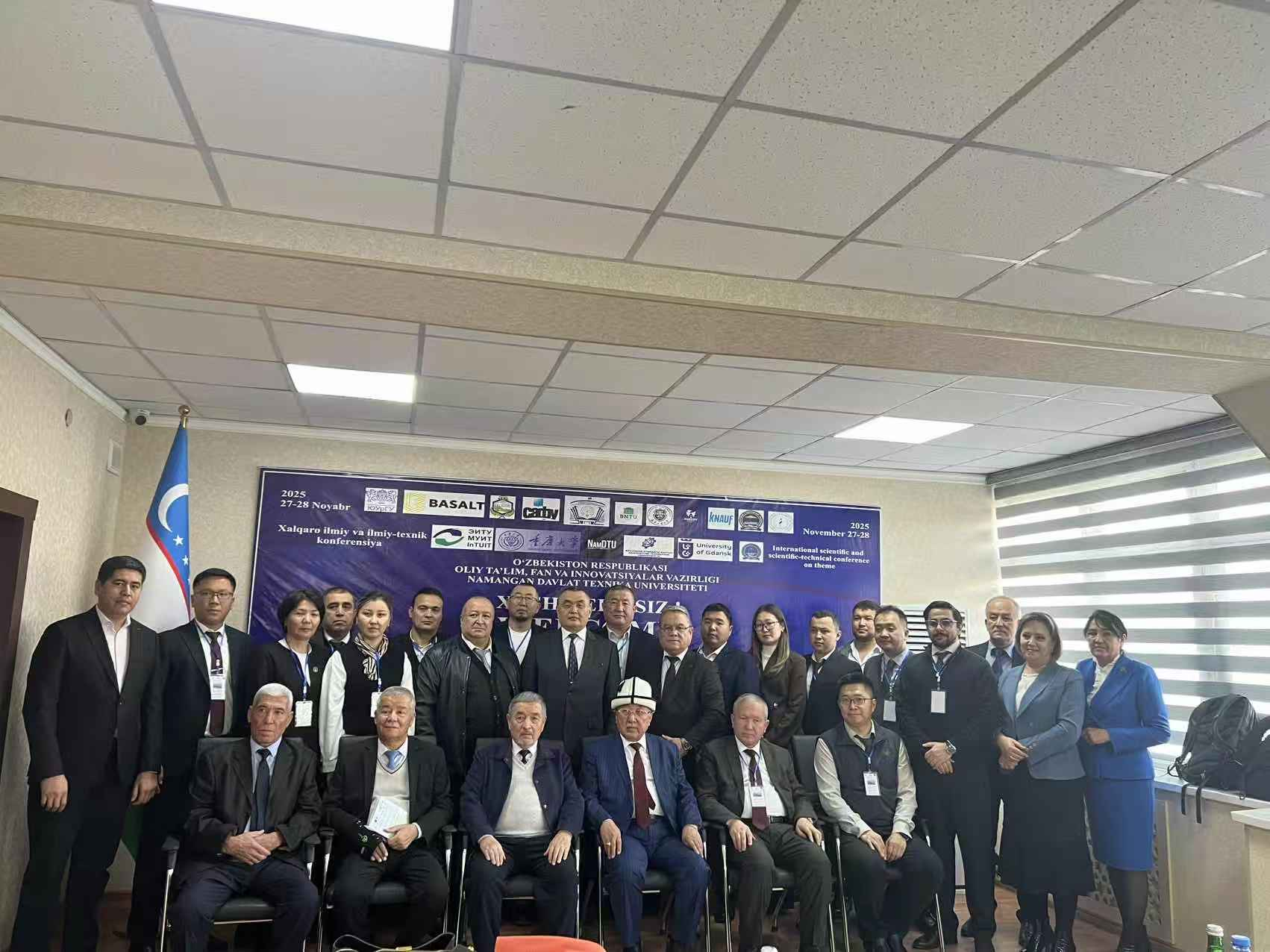
ICSSBS opening ceremony
At the conference, professor Wengang Zhang’s presentation, titled “Preliminary investigation of geotechnical bionics: Innovative pile foundations and root-inspired geotechnics”, systematically explained the application of bio-geotechnics in the design of new pile foundations. Professor Xiao Li’s presentation, titled “The impact of extreme wind events on urban built environment”, provided an in-depth analysis of the damage characteristics and failure mechanisms of urban buildings under extreme wind events such as typhoons, downbursts, and tornadoes. Dr. Pouria Ayough’s presentation, titled “Prestressed concrete-filled steel tubular lattice tower for wind turbine supporting structures: From concept to application”, comprehensively introduced the design philosophy and engineering application cases of a new type of wind turbine tower structure. Additionally, professor Wengang Zhang delivered a special academic lecture for NamDTU students titled “Protection of world heritage of rock: experience from Dazu rock carvings and Huashan petroglyphs & geotechnical research”, introducing Chongqing University’s contribution to the protection of important cultural heritage sites in China. The presentations were substantial in content and featured cutting-edge perspectives, garnering significant attention from attendees and sparking lively academic discussions.

Professor Wengang Zhang delivering an academic presentation

Professor Xiao Li delivering an academic presentation

Dr. Pouria Ayough delivering an academic presentation

Professor Wengang Zhang giving a lecture on protection of cultural heritage
During the visit, the delegation was invited to conduct an academic investigation at the important historical site of the ancient city of Ahsikent on the Central Asian Silk Road. The ancient city of Ahsikent was formed around the 2nd century BC and was later destroyed by the Mongols in the 13th century. During its existence, it was the largest trade and handicraft center in the region, and its ruins and unearthed artifacts possess extremely high historical and cultural value. According to the introduction by the head of the conservation project for the Ahsikent ruins, the rock structures of the site are severely affected by weathering damage. To address this issue, professor Wengang Zhang proposed drawing on the experience of the Dazu rock carvings protection projects by applying nano-calcium hydroxide coatings to effectively slow stone weathering. This technology could be extended to the protection of stone cultural relics and earthen archaeological sites in Uzbekistan. Regarding the impact of wind erosion on stone cultural relics, professor Xiao Li proposed that computational simulation of local wind field could be used to quantitatively assess the weathering process and degree in the site area.
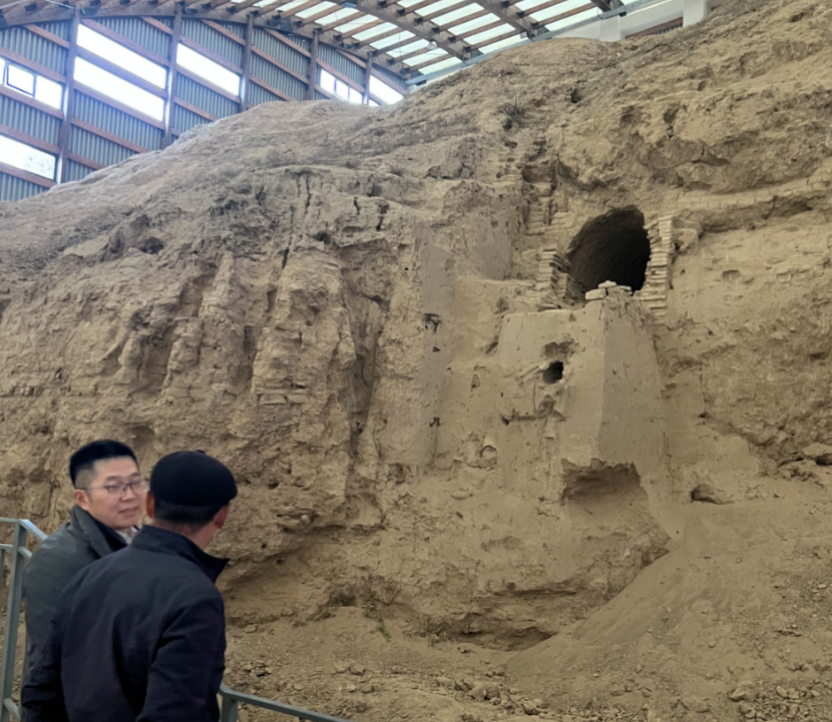

Site investigation of the ruins of Ahsikent
The joint organization of the ICSSBS conference by Chongqing University and NamDTU has opened up new opportunities for academic exchange between the two institutions. Both sides will take this opportunity to deepen further academic collaboration in frontier fields such as civil engineering, jointly promote scientific research innovation and talent cultivation, facilitate people-to-people bonds and knowledge sharing between China and Uzbekistan under the framework of the Belt and Road Initiative, and inject new wisdom and vitality into regional sustainable development.